
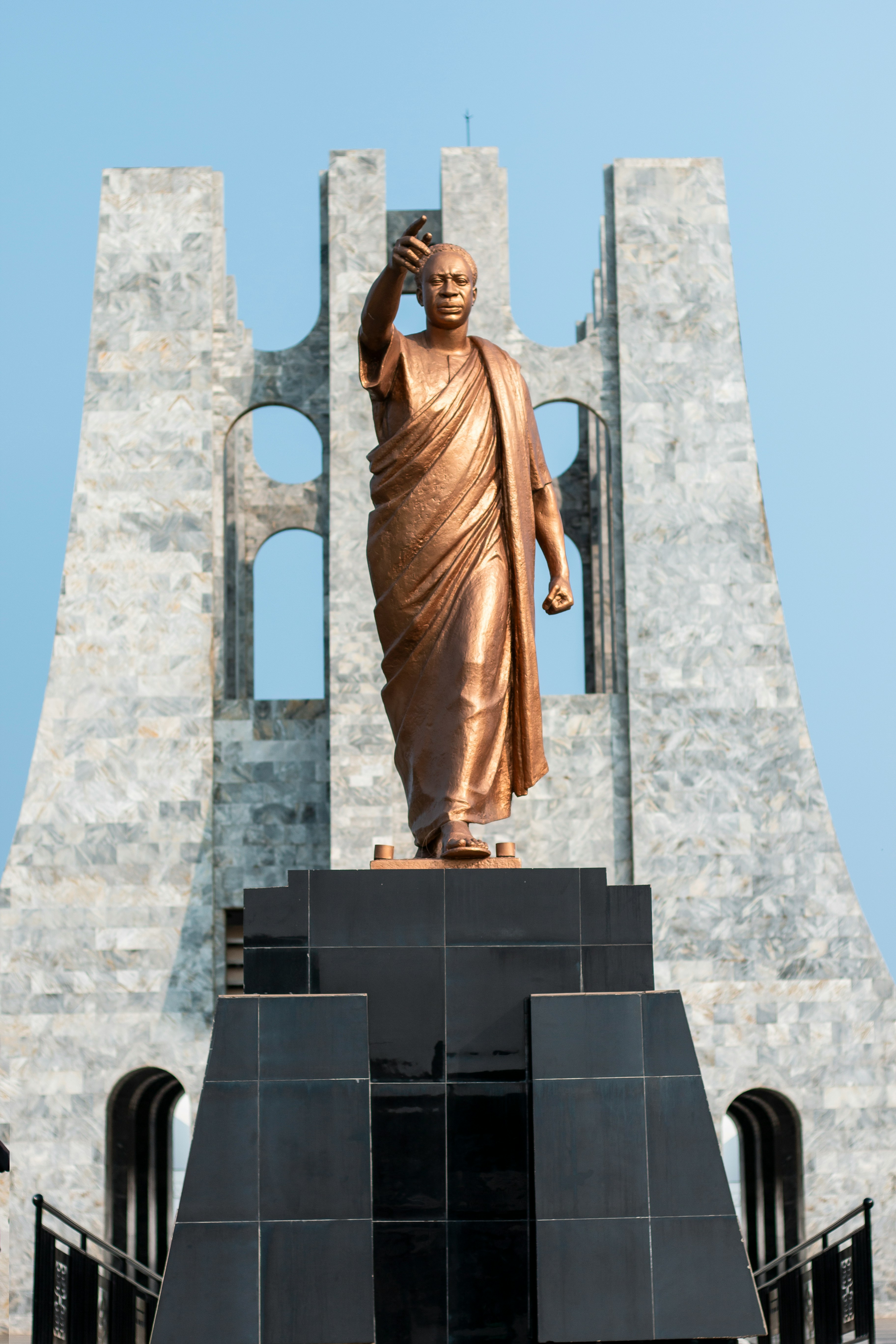
On 19 July 1965, Ghana left the sterling area. Kwame Nkrumah had been independent for eight years, and for those eight years his country had still been using a currency whose ancestry ran back to the West African Currency Board. Now there was no longer a Ghanaian pound, but a cedi, named for the Akan word for cowrie shell, printed by a Ghanaian central bank, and carrying Nkrumah's portrait on the face of every note.
It was a magnificent gesture. Money is the most widely distributed document a state produces. Every market trader in the country would now handle a piece of paper that said, in effect, we govern ourselves and here is the proof.
Nineteen months later, Nkrumah was deposed in a coup while in the air on his way to Hanoi. Within a year the new military government had recalled the notes and reissued the cedi without his face on it.
This is the trajectory of independence-era currencies in microcosm. The symbol preceded the substance, the latter of which took much longer to materialise and proved to be much more difficult to construct than anything that had been forecasted before.
Central banks provided an opportunity for discretion, which currency boards did not allow. A sovereign country could choose how much money it wished to create, and there was nothing illegal about this. Quite the opposite, in fact.
The difficulty lay in what that discretion sat next to. New governments had made enormous promises, needed to fund roads, schools, universities, national airlines and state enterprises, and had thin tax bases and no domestic bond markets to borrow from. So they borrowed from the institution they now controlled. The central bank financed deficits, which is a polite way of describing printing money.
Prices went up. But the government maintained the official exchange rate regardless, since devaluation would have been politically embarrassing, and besides, it would make imported goods even more expensive. With the overvalued exchange rate and inflation at home, the effect was unavoidable. Money from outside became rare, and access to it became a commodity the state distributed at its discretion. Import licenses became favours. In Ghana, the underground economy that resulted was called "kalabule." In Uganda, it was "magendo." There were always two exchange rates: the official and the street, and the difference between them gave the best estimate of the failure of the currency.
The bill came due by the early 1980s in the form of the International Monetary Fund and the World Bank. Through structural adjustment, the currencies were devalued, the licensing system was abolished, subsidies were reduced, and imports became possible. On paper, it all worked – the premiums went down and the license-rationing system became extinct. Humanly speaking, the 1980s and 1990s have become for much of Africa the years of declining wages and clinic fees.
And at the far end of the distribution were the catastrophes. Mobutu's Zaire went through repeated collapses and two separate currency reinventions. Zimbabwe reached the point in 2008 of issuing a hundred-trillion-dollar note, and in 2009 did the thing that ends the argument: it abandoned its own currency altogether and let the population transact in United States dollars.
This was not the universal story. Botswana built the pula into one of the soundest currencies in the developing world, and the CFA zones, whatever else you make of them, held inflation well below the continental average. Sound money was achievable. It just required a discipline that was in short supply.
Now the punchline, which is where this section has to land.
Recall the three things money is supposed to do. Store value. Serve as a unit of account. Function as a medium of exchange. Across much of Africa, by the end of the twentieth century, each of those functions had quietly migrated to a foreign currency. When they could, savings were held in dollars. Land, vehicles, rent and machinery were priced in dollars. And when a Ugandan business needed to pay a Rwandan one, no meaningful market existed for shillings against francs, so the trade went through dollars.
Colonial money extracted value from Africa. Post-colonial money, in too many places, simply failed to do its job, and the vacuum was filled by the currency of a country nobody had voted for.
Which raises the question the next section has to answer. If two neighbouring African states both need dollars to trade with each other, who actually supplies them? The answer is not in Africa at all.

Discussion
Comments
Comments go up straight away. Your email is never published — it is only used to tell you about replies.
Nobody has said anything yet. Go first.
Leave a comment