
On a busy morning in Kigali, traders in Nyabugogo market shout over the hum of buses and the rustle of stacked francs. A woman sells beans, a man loads cloth onto a cart, a moto driver fuels up for the day. Cash still reigns here, crumpled notes exchanging hands with the same urgency that has fueled Rwanda’s economy for decades.
But a quiet shift is coming. Today, many Rwandans already pay with mobile money. Fast, familiar, everywhere. So why would a Digital Rwandan Franc matter? Because, unlike MoMo or Airtel Money, it would be public money created and guaranteed not by a telecom or commercial bank, but by the National Bank of Rwanda (BNR) itself.
That’s the promise of a Central Bank Digital Currency (CBDC). But beyond the buzzword, what would it actually mean for Rwanda?
When BNR released its CBDC feasibility study back in 2024, it wasn’t just ticking a box. It dove in deep, weighing 15 opportunities, 12 risks, and pinpointing four “sweet spots” where this tech could reshape the economy. Now, as of September 2025, Rwanda has moved from research to action: A proof-of-concept phase is underway, with results expected by October. Limited pilots are testing the waters, aligning with the National Fintech Strategy (2024–2029). It’s not a done deal yet, but the momentum is real. Could a launch come by year’s end?
CBDC in Plain Language
A Central Bank Digital Currency is just money in digital form, issued directly by the central bank.
One digital franc = one paper franc.
It lives in your phone but is as safe as cash in hand.
Unlike mobile money, it’s not a telco balance; BNR itself backs it.
Unlike crypto, it won’t swing wildly in value.
Importantly, a Digital Rwandan Franc would not replace mobile money or credit cards. Instead, it would work alongside them.
Rwanda in the Global CBDC Wave
Rwanda isn’t inventing the wheel here; it’s smartly joining a worldwide shift. As of 2025, 134 countries (covering 98% of global GDP) are exploring CBDCs, with a record 49 in pilot stages. But full launches? Yet despite the buzz, only three countries have fully launched: The Bahamas’ Sand Dollar, Jamaica’s Jam-Dex, and Nigeria’s eNaira.
The lessons from these pioneers are clear:
Nigeria’s eNaira (launched in 2021) shows how hard adoption can be. Less than 1% of Nigerians used it within a year, held back by trust concerns and doubts over real-world value.
China’s digital yuan leads the world in scale, piloted across dozens of cities with billions in transaction volume. It’s integrated into daily life, from paying bills to salaries, proving how real integration drives momentum.
The Digital Euro is still in the preparation phase, wrapping up by October 2025, with decisions pending. Offline features and public tests are in play, driven by Europe’s push for payment independence. Rollout? Possibly 2026 or later, but whispers of 2028 implementation highlight the need for caution.
India’s Digital Rupee is a pilot success story, with circulation jumping to ₹10.16 billion by March 2025, up 334% year-over-year. At peak, it handled over a million daily transactions, proving phased rollouts build trust and scale.
Against this backdrop, Rwanda’s entry is timely and strategic. Not first, but fast and with the advantage of learning from both global successes and setbacks. This gives Rwanda the opportunity to design a CBDC that reflects local realities, solves local pain points, and aligns with its long-term vision of inclusive digital growth.
The Four Sweet Spots
BNR identified four areas where a CBDC could deliver real value beyond existing alternatives:
Resilience: Payments that keep working during power outages or network failures. Imagine offline digital cash that works even without 2G coverage.
Competition & Innovation: Today, Rwanda’s digital payments are dominated by two players, MTN and Airtel. A CBDC could open the rails, lowering fees and creating space for new fintech entrants.
Cashless Economy: Cash circulation has risen over 50% between 2019–2022, costing the central bank over $30 million in printing and processing. A CBDC could cut these costs while supporting the national cashless vision.
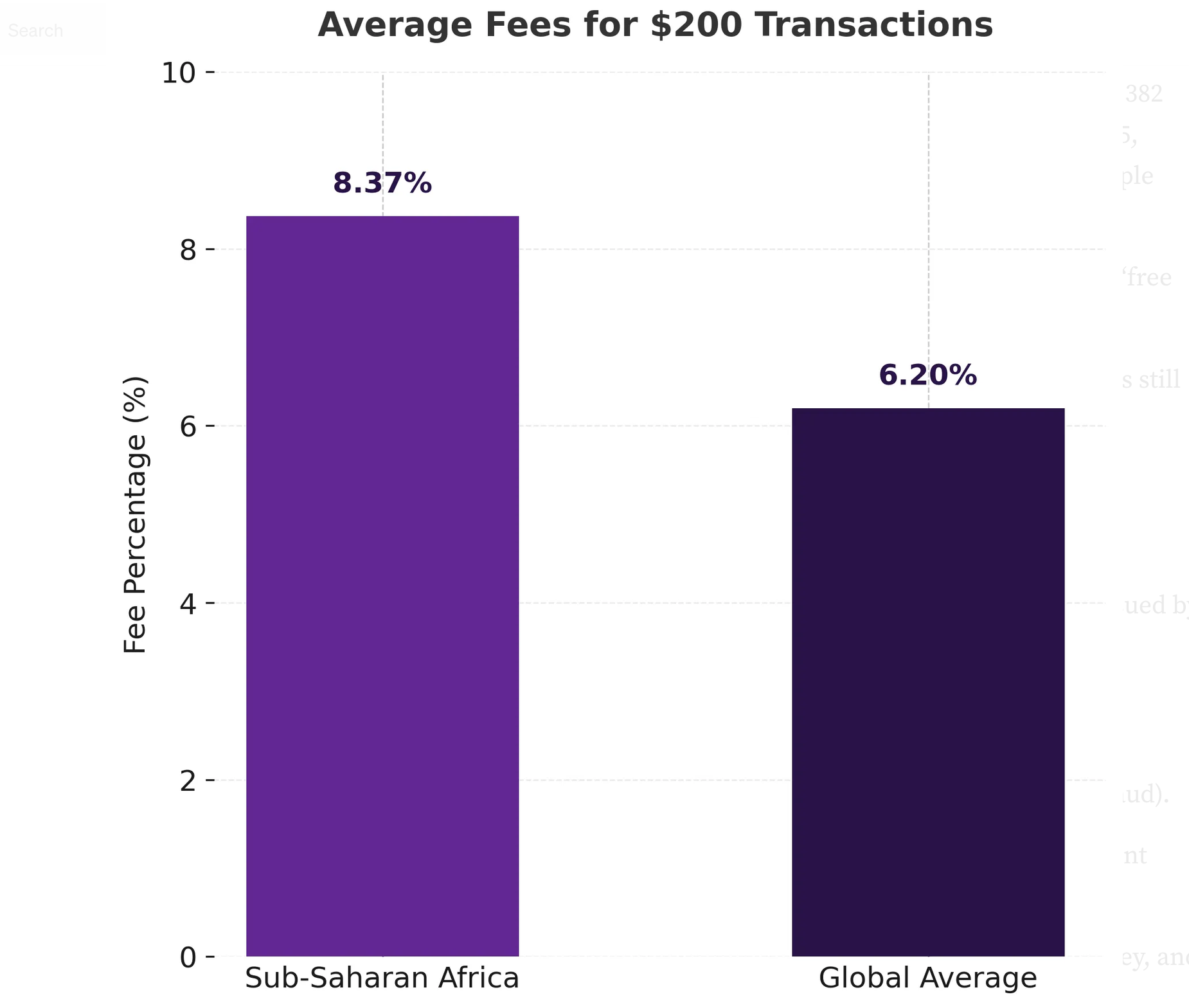
Cross-Border Remittances: Sending $200 from Tanzania? Fees can eat up 9–11% or more, per recent data though some corridors hit higher. In Sub-Saharan Africa, averages hover at 8.4%. A CBDC could cut that dramatically, speeding transfers and putting more money in families’ pockets.
The Pitfalls
BNR is equally candid about risks:
Public adoption is not guaranteed. Mobile money dominates with 382 million transactions in 2022, a 61% jump from 2021. As of mid-2025, Rwanda boasts 5.73 million wallets, 66% of adults. Why would people switch unless a CBDC offers clear benefits?
Merchants and financial service providers may resist. If CBDC is “free digital cash,” where’s their incentive to support it?
Trust and literacy gaps remain. Past surveys show many Rwandans still feel financial products lack transparency. Without education and outreach, a CBDC risks being misunderstood.
The Design Principles
BNR’s study recommends a two-tier, universal, zero-interest CBDC, issued by BNR but distributed by financial service providers. Key features:
Token-based (works offline, even without internet).
Balanced privacy (privacy for honest users, but tools to combat fraud).
Limits on holdings and transactions (to protect stability and prevent money laundering).
Interoperability (must integrate with banks, SACCOs, mobile money, and eventually, other CBDCs).
Open programmability (allowing fintechs to innovate on top of CBDC rails).
Why This Moment Matters for Rwanda
Cash is expensive: Over $35M projected costs in the next five years just to print, manage, and destroy notes.
Remittances are broken: Sub-Saharan Africa is the costliest region for sending money. Rwanda, integrated in East African trade, needs cheaper rails.
Mobile money is powerful but limited: 70% of transfers run through MTN and Airtel. This duopoly means high fees and slower innovation.
A Cautious Path Forward
BNR makes one thing clear, there is no rush. Instead, BNR proposes an iterative approach:
User research, followed by Proof of Concepts, then Pilots, and finally a National decision.
Testing not only the technology, but also whether citizens and merchants actually want it.
Aligning with regional and global projects from BIS’s mBridge (cross-border CBDCs) to potential East African Monetary Union pilots.
Final Thought
The challenge is clear, who will build the bridges to make this digital franc a part of daily life? At InversePay we’re stepping up. We’re not just building tech, we’re crafting tools, teaching skills, and connecting communities to ensure this CBDC lifts everyone. It’s time to roll up our sleeves and build a future where money works for all of us.
Connect with us on LinkedIn | Follow InversePay for more insights on financial inclusion, CBDCs, and Africa’s fintech future.

Discussion
Comments
Comments go up straight away. Your email is never published — it is only used to tell you about replies.
Nobody has said anything yet. Go first.
Leave a comment